Myanmar: Kokang Border Guard Force 1006 Militia 2009-2023

The Kokang Self-Administered Zone

The Kokang Self-Administered Zone (SAZ) occupied a strategic and contested strip of northern Shan State, Myanmar, abutting China’s Yunnan Province. Constituting one of Myanmar’s self-administered areas under its 2008 Constitution, Kokang’s demography is distinct within the Union: the majority of its population are ethnic Kokang Chinese, culturally and linguistically aligned with the Han Chinese of neighbouring China, speaking Mandarin and maintaining strong cross‑border social and economic ties.
Historically at the nexus of China–Myanmar frontier dynamics, the Kokang SAZ served as both a gateway and a buffer between the two states. Its people traditionally share affinities with communities across the Yunnan border, and economic life in the region has been shaped by this relationship. Cross‑border trade—both licit and illicit—has bound Kokang to China’s market and legal environment, with Beijing exerting considerable influence over border security and bilateral cooperation on criminal matters.
Concurrently, the zone’s rugged terrain and weak central governance have created enduring challenges for state authority. For decades Kokang lay within the Golden Triangle, a tri‑border area notorious for opium cultivation and heroin production, and narcotics trafficking was integral to its local economy and armed group financing until concerted eradication efforts in the early 2000s.
In the years since the establishment of the SAZ, criminal activity in Kokang had diversified, with large‑scale online fraud syndicates, illegal gaming enterprises, extortion, and human trafficking becoming prominent. Chinese law enforcement had even pursued suspects across the border for such offences, underlining the transnational character of crime emanating from the Self-Administered Zone.
The Kokang Border Guard Force 1006
Border Guard Forces (BGFs) are official subdivisions of the Myanmar military (Tatmadaw) created in 2009 to integrate former ethnic insurgent groups into the national command structure.

Kokang’s Border Guard Force (BGF) 1006 emerged as a military-proxy formation in the aftermath of the 2009 Kokang Incident, a pivotal episode in Myanmar’s long-running northern Shan State conflicts. The incident followed a mutiny within the Myanmar National Democratic Alliance Army (MNDAA) when Deputy Commander Bai Suocheng rejected the command of MNDAA leader Peng Jiasheng and aligned with the Myanmar Armed Forces (Tatmadaw). In doing so, Bai’s forces were incorporated into the Tatmadaw’s Border Guard Force programme as Unit #1006, intended to integrate ethnic militias under central command and reduce autonomous armed actors along the state’s frontiers.

Leadership, Structure, and Operational Functions
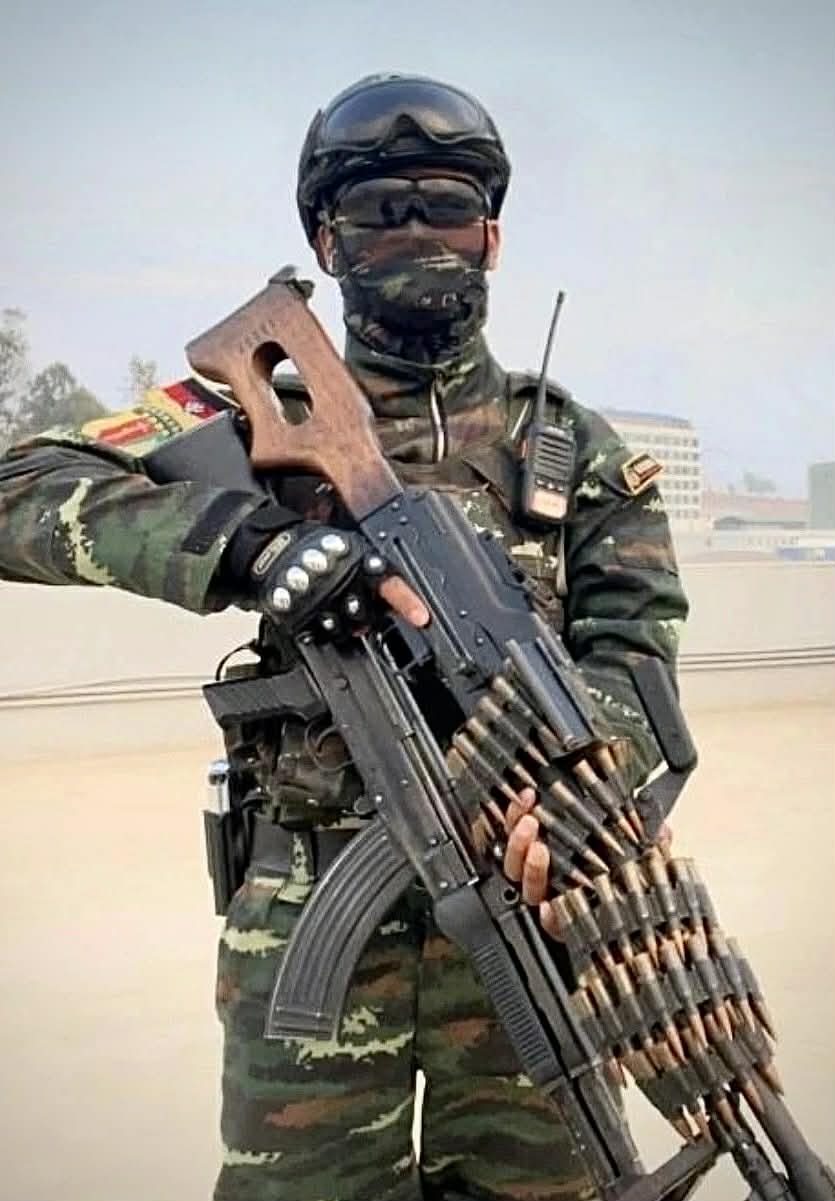
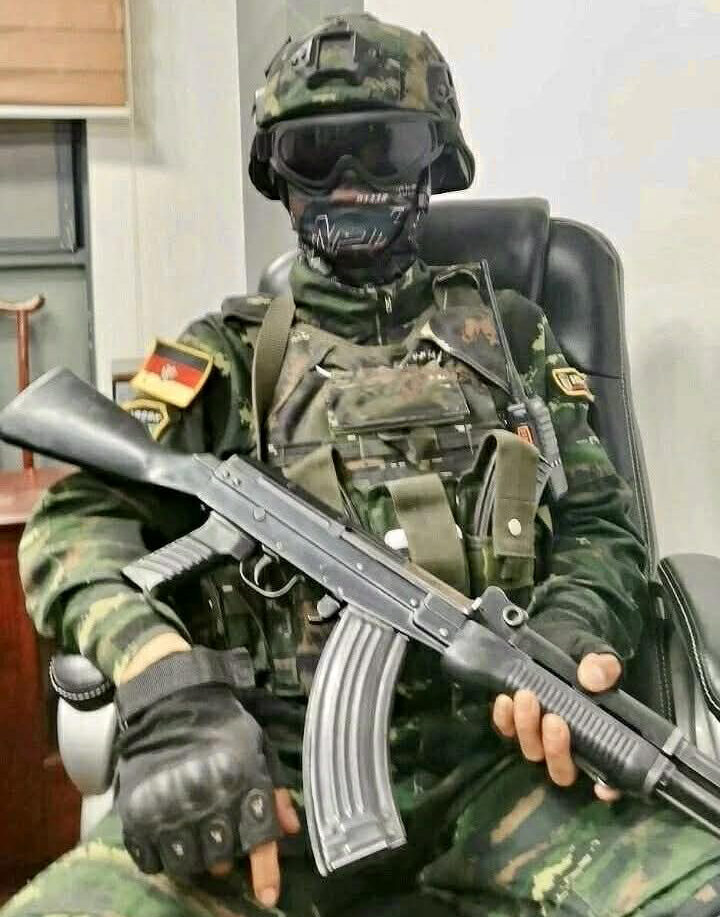
BGF 1006 was effectively a military-political instrument designed to cement Tatmadaw influence in the Kokang Self-Administered Zone. Its leadership was dominated by Bai Suocheng and members of his extended family, leveraging longstanding familial networks within Kokang society. The force comprised primarily ethnic Kokang fighters supplemented by a small cadre of Tatmadaw officers embedded in administrative and liaison roles, a common practice in the Border Guard scheme that aimed to blend local legitimacy with central control.
Operationally, BGF 1006 functioned as a localised security force and adjunct to Tatmadaw regional operations, responsible for securing Laukkai—the administrative centre of the SAZ—and key population centres against insurgent threats, notably from renewed MNDAA factions and allied ethnic armed organisations. The force’s remit included internal security, local law enforcement cooperation, and the control of transport nodes and economic infrastructure in partnership with the Tatmadaw’s regional command. In practice it served as the private army of the ruling families.

Facilitating Criminal Enterprises
During its operational tenure, the zone under BGF 1006’s influence became infamous as a hub for transnational organised crime. Under Bai Suocheng’s dominion, the region hosted extensive online scam centres, illegal gambling operations, and narcotics trafficking activities. These illicit networks were not peripheral; they generated billions in revenue and were protected by armed groups operating in parallel with the BGF and Tatmadaw. Multiple syndicates—often referred to collectively as the “Four Big Families” in Kokang—leveraged armed protection to run sophisticated scam compounds targeting overseas victims, particularly Chinese nationals. These operations blended illegal economic activity with local power projection, and reports noted the integration of organised crime into the region’s militarised governance arrangements.
By the early 2020s, the scale and violence associated with these operations catalysed a strategic recalibration by the People’s Republic of China. Beijing, sensitive to the effects on its citizenry and domestic stability, increasingly pressed Naypyidaw to crack down on transnational fraud and associated criminality stemming from Kokang and adjacent borderlands. This dynamic placed additional strain on the already fragile legitimacy of the BGF and its protectors within the Tatmadaw.
Post 2021 Coup, Operation 1027, the defeat of BGF 1006 and aftermath
After the February 2021 military coup in Myanmar, which plunged the country into a deep civil war, Kokang became a theatre not only of ethnic resistance but also of wider contestation between the ruling State Administration Council (SAC) and manifold insurgent coalitions. The Myanmar National Democratic Alliance Army (MNDAA)—the principal armed ethnic organisation in Kokang—which was expelled from the region in 2009 remained a resilient actor seeking to reclaim autonomy and local authority.
In late October 2023, the MNDAA joined the Three Brotherhood Alliance with the Arakan Army and Ta’ang National Liberation Army to launch Operation 1027, a coordinated offensive against junta forces and their allies along the China–Myanmar border. In northern Shan State, and particularly within Kokang, the offensive combined coordinated ground operations, interdiction of supply routes, and multi-axis attacks on fixed Tatmadaw and it’s proxy militias.
BGF 1006’s positions, including those in and around Laukkai, were isolated and overwhelmed during this campaign. BGF 1006’s inability to sustain cohesive defence under sustained pressure from the Brotherhood Alliance, compounded by logistical constraints and competitor insurgent operations, resulted in the collapse of junta control over the Kokang SAZ in January 2024. This effectively ended BGF 1006’s existence as a functional armed unit. The region subsequently came under the de facto control of the MNDAA and allied forces, who assumed security and administrative responsibilities.

Following the military setbacks, Bai Suocheng and several associates fled Laukkai in the face of advancing insurgent forces. In early 2024, Bai, his son Bai Yingcang, and other alleged criminal figures were apprehended by Myanmar authorities. Along with his son and other prominent individuals from Kokang’s ruling cabal, they were extradited to China on 30 January 2024. Bai was tried in the Shenzhen Intermediate People’s Court and on 4 November 2025, sentenced to death. However, he was reportedly taken to hospital the day after the sentence was handed down and died before it could be carried out. Eleven other members of Kokang’s ruling clans were executed by the Chinese authorities in late January 2026.

Sources
- Shan Herald Agency for News, “BGF Men Flee After Junta Breaks Promise”, Burma News International, detailing the 2009 Kokang conflict and transformation of MNDAA elements into Border Guard Forces, including BGF 1006.
- Mizzima News, “China Issues Arrest Warrants for Kokang Leaders”, 14 December 2023, outlining Bai Suocheng’s role in Kokang governance and the origins of the Kokang Border Guard Force.
- Wikipedia, “Bai Suocheng”, summarising Bai’s defection from the MNDAA, leadership of BGF 1006, and subsequent political authority within the Kokang Self-Administered Zone.
- Burma News International, “Junta Hands Over Kokang Telecom Scam Leaders Named in Chinese Warrants”, reporting on the nexus between Kokang BGF leadership, cyber-fraud operations, and Chinese law enforcement action.
- Shan News (English), “China Sentences Kokang Crime Figures Over Telecom Fraud”, providing detail on prosecutions and the dismantling of Kokang criminal networks linked to BGF leadership.
- Wikipedia, “Operation 1027”, describing the 2023–24 Three Brotherhood Alliance offensive, the MNDAA’s return to Kokang, and the erosion of BGF 1006 and Tatmadaw control in Laukkai.
Related

The Myanmar National Democratic Alliance Army (MNDAA)
The Myanmar/Burmese KNLA Insurgent Army Patch


